THE SURVEY
First, count the money
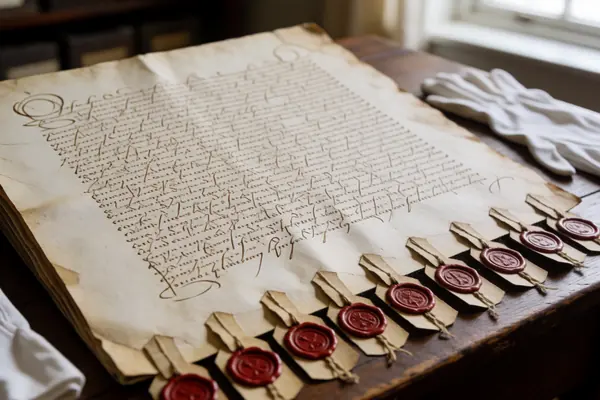
In 1534–35 the Valor Ecclesiasticus valued church income across the realm. The National Archives calls it the greatest survey of church property since 1291.
See the timeline reformationsin
A TUDOR HISTORY, IN PLAIN ENGLISH
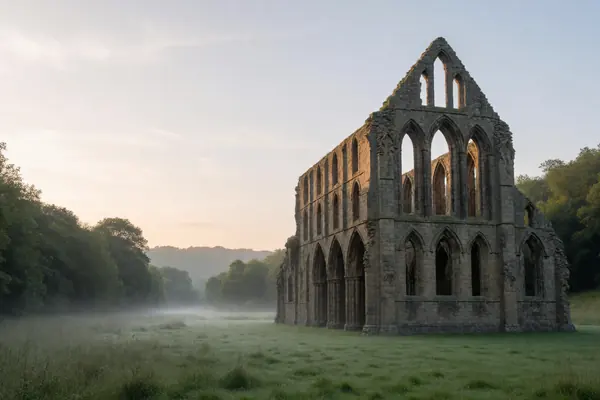
England's great abbey ruins were not worn down by time.
Follow the timeline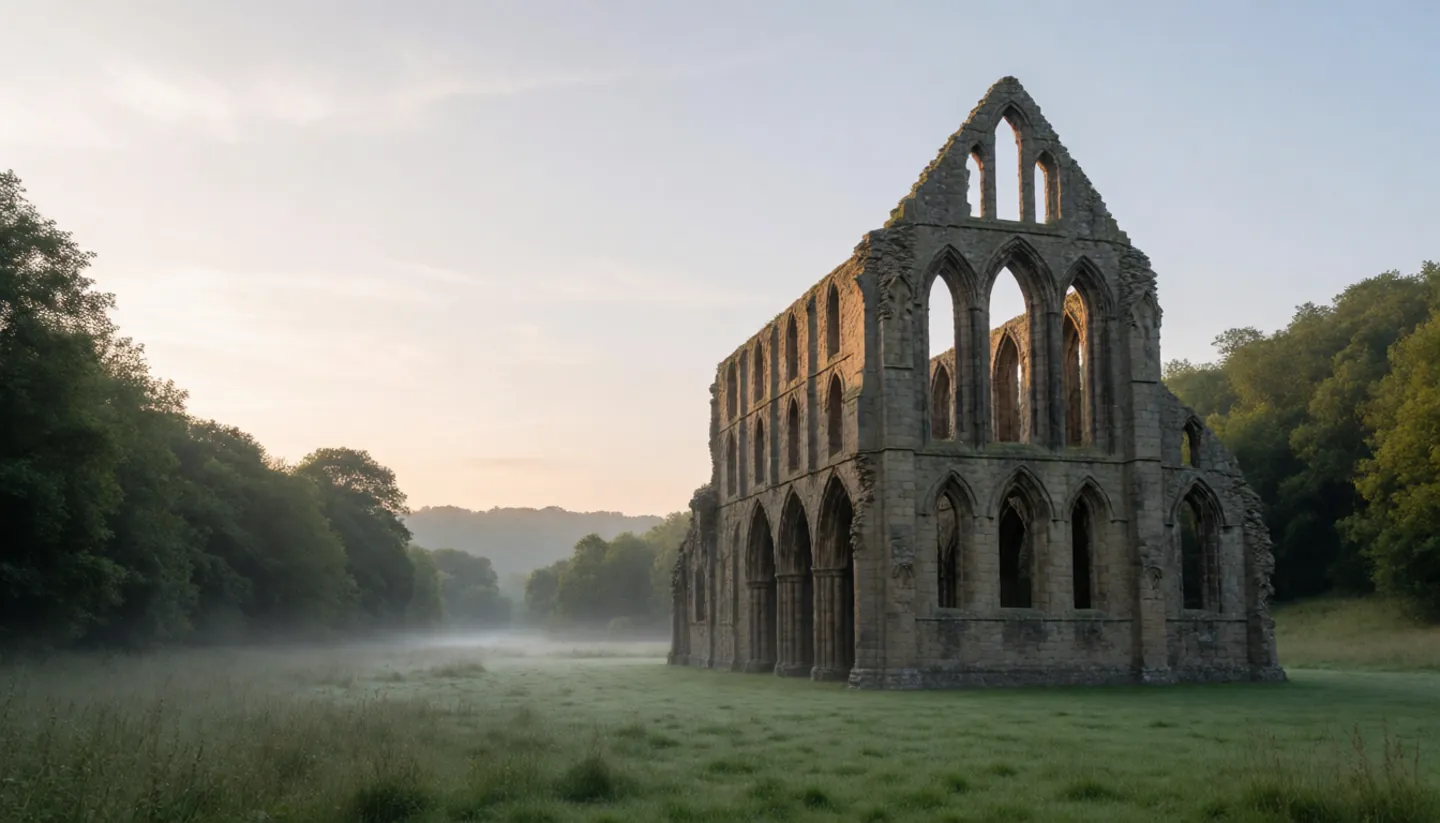
1536–1540the monasteries close
Most were closed and stripped in a few years, between 1536 and 1540. This independent history guide follows the paperwork, the money and the masonry, using records from The National Archives and English Heritage.
Updated
THE SHORT ANSWER
The closures followed a paper trail.
Much of it still survives at Kew.
THE SURVEY
In 1534–35 the Valor Ecclesiasticus valued church income across the realm. The National Archives calls it the greatest survey of church property since 1291.
See the timelineTHE SMALL HOUSES
In 1536 the lesser monasteries, with fewer than 12 monks or nuns and under £200 a year, were dissolved. English Heritage says this helped spark the Pilgrimage of Grace.
See the numbersTHE BUILDINGS
Commissioners sold bells, stripped and melted the roof lead, and pulled down towers with ropes and other engines. What was left became the ruins we visit.
Read a ruinA QUICK TIMELINE
Pick a moment to see what was happening to England's religious houses. The bar shows how far the closures had reached.
History only, drawn from The National Archives research guide and English Heritage abbey histories. This site is not affiliated with any church.
TWO NUMBERS WORTH KNOWING
One abbey's income,
one abbey's shrinking community.
£805 a year
Yearly income when the Crown assessed it
That made Furness the wealthiest monastery in north-west England and the second richest Cistercian abbey in England, four times the £200 line used for the 1536 closures.
FURNESS ABBEY · ENGLISH HERITAGE
650 → 23
Community at its peak, then at closure
Rievaulx housed a 650-strong community in the 1160s, including lay brothers. When it was shut in December 1538, only 23 monks remained.
RIEVAULX ABBEY · ENGLISH HERITAGE
English Heritage found Robert Southwell's 1537 accounts for Furness at The National Archives in 2021: almost £800 was raised from the abbey's suppression, but only £367 remained after costs, and the men of Kendal paid £80 for its bells.
FOUR THINGS TO LOOK FOR
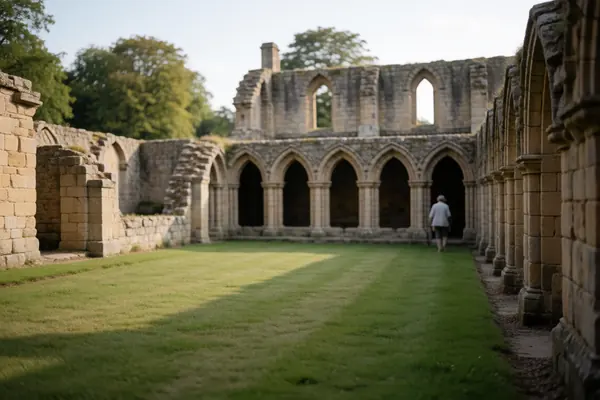
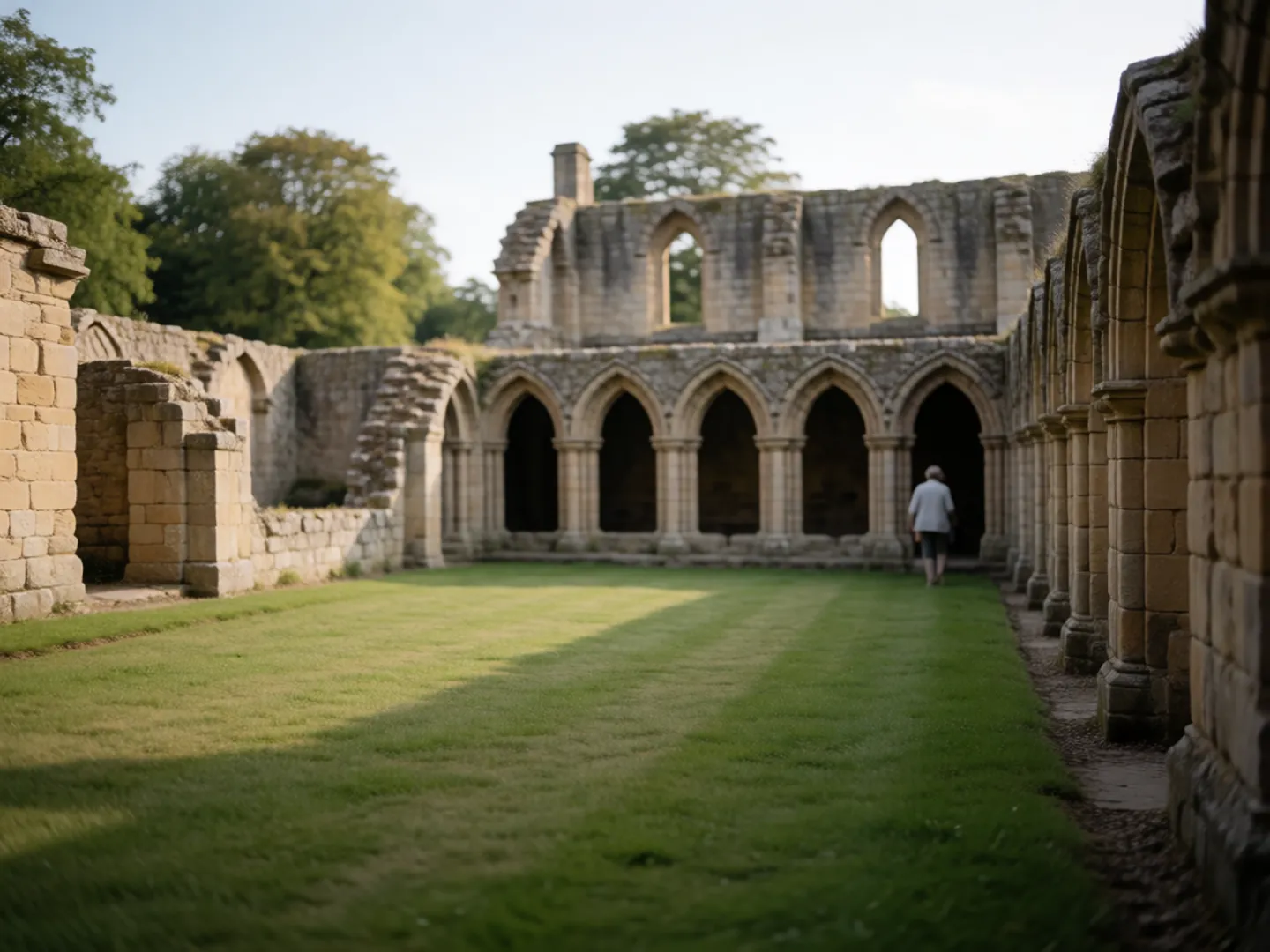
Most abbeys followed a similar plan, so once you know the pattern you can find your way round almost any ruin. English Heritage's description of Rievaulx is a good model.
It is the biggest and tallest ruin. The east end, the presbytery, was the monks' part; at Rievaulx the west end served the lay brothers.
The open square beside the church linked every building. At Rievaulx it is about 42 metres square, and the north walk was used for reading.
The east range held the chapter house, parlour and dormitory above; the range opposite the church held the warming house, refectory and kitchen.
After the closures, buildings were adapted. At Rievaulx the refectory undercroft became a charcoal store for an ironworks.
AFTER THE MONKS LEFT
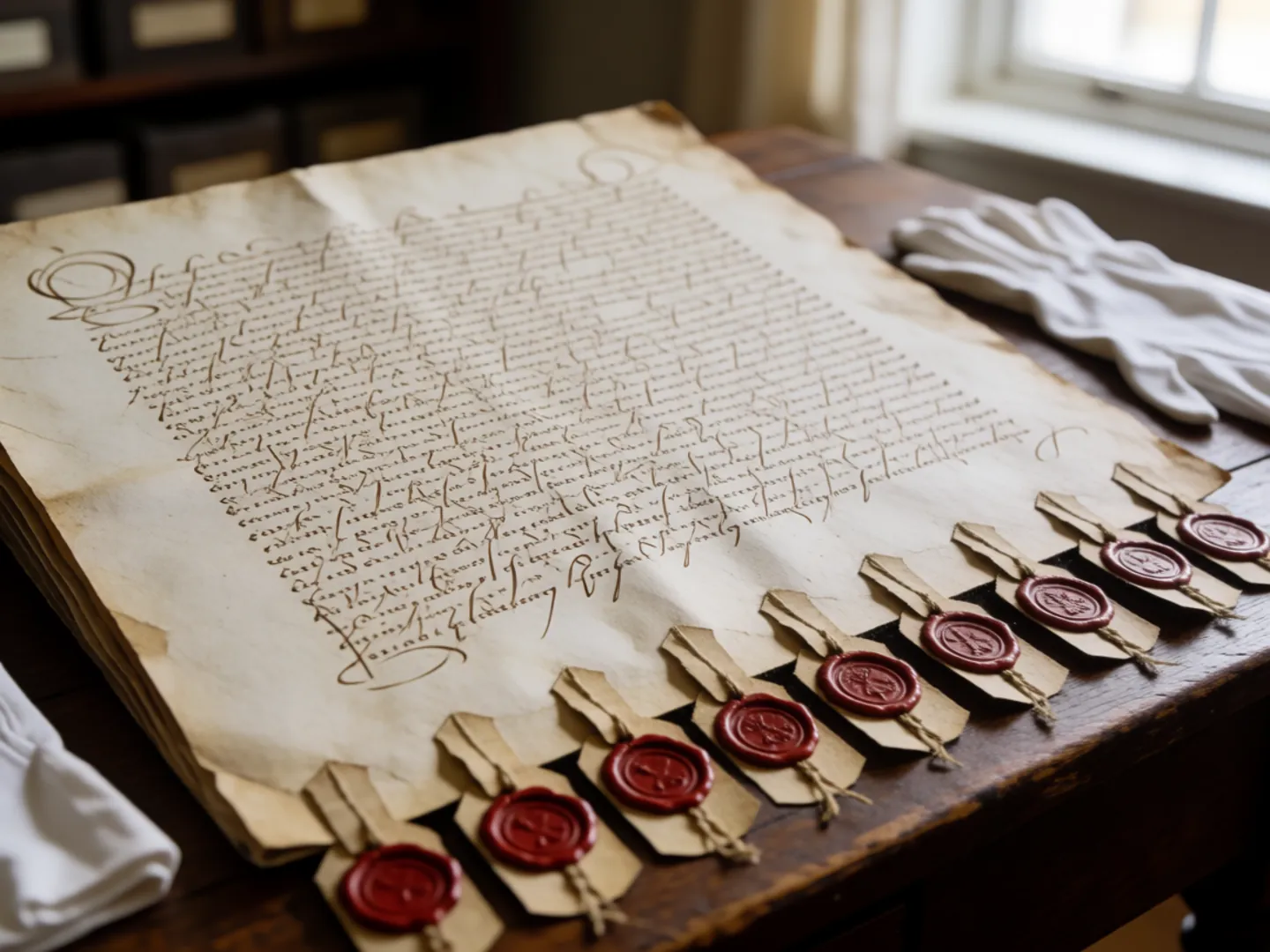
A new Court of Augmentations managed the confiscated estates. The National Archives holds its surveys, sales, leases and the warrants for pensions paid to former monks and nuns. Rievaulx was sold to the Earl of Rutland, who kept the roof lead and bells for the king.
Centuries later the ruins found new admirers. Artists painted Rievaulx from the 1770s, Wordsworth wrote about Furness, and in July 1917 the Office of Works took Rievaulx into state guardianship to stop it collapsing.
Questions
The National Archives dates it to 1536–1540, with a build-up from 1524, when Cardinal Wolsey dissolved about 30 religious houses. It covered abbeys, priories, convents and friaries in England, Wales and Ireland.
English Heritage describes them as houses with fewer than 12 monks or nuns and an income below £200 a year. They were dissolved in 1536; the larger houses followed from 1537.
Roof lead was valuable. Commissioners stripped, melted and sold it, along with bells and other fittings, and some buildings were deliberately pulled down. At Furness the bell tower was brought down with 'ropes and other engynes'.
Many received pensions; The National Archives holds pension warrants and lists of former monks and nuns. At Furness, a 1537 account shows the monks were paid to leave quietly.
Yes. The National Archives suggests starting with the published Letters and Papers of Henry VIII, then searching its Discovery catalogue for terms like 'dissolution' or 'abbey' plus a place name.
ABOUT THIS NAME
reformationsin.com is part of the DoodleSale portfolio. It isn't in an auction right now, but you can ask about leasing it.